
Steam, Scrub & Socialise: The Hammam Bathing Ritual
For thousands of years, humans have gathered around heat and water — not only to cleanse the body, but to restore the mind and strengthen social bonds. Among the most enduring of these traditions is the hammam, a ritual bathhouse experience originating in the Middle East and North Africa that centres on steam, exfoliation, and communal presence.
Far more than a bath, the hammam is a highly sensorial journey - one that moves the body through warmth and release, and the mind into a quieter, more receptive state. Today, as modern wellness returns to ancient practices, the hammam remains a powerful reminder that bathing has always been both personal and collective.

WHAT IS A HAMMAN?
A hammam (from the Arabic ḥammām, meaning “spreader of warmth”) is a traditional public bathhouse designed around steam, heat, and ritual cleansing. While hammams trace their roots back to Roman and Byzantine bathing culture, they reached their architectural and cultural height during the Ottoman Empire from the 14th century onwards.
Built throughout Turkey, Morocco, the Levant, and North Africa, hammams were carefully integrated into daily life and often located near mosques and bakeries, sharing heat sources in a feat of thoughtful, resource-efficient design. At their core, hammams were places of purification, preparation, and gathering.
A SOCIAL HAMMAN BATHING RITUAL
Historically, hammams served a vital social function. Before private bathrooms became common, public bathhouses were essential spaces where people from all levels of society gathered to wash, groom, and connect. Women would arrive carrying baskets filled with toiletries, perfumes, and cosmetics - a detail many scholars cite as an early precursor to the modern day spa.
Unlike Roman thermae, which were often expansive and monumental, the hammam emphasised ritual repetition. Conversations unfolded slowly. Silence was equally welcome. The act of bathing became a shared rhythm rather than a spectacle.
In Islamic culture, purification of the body is closely tied to spiritual practice — further embedding hammams into daily life as places of both physical and symbolic renewal.

ARCHITECTURE AS HEALING
Hammam architecture is not incidental. It is integral to the experience.
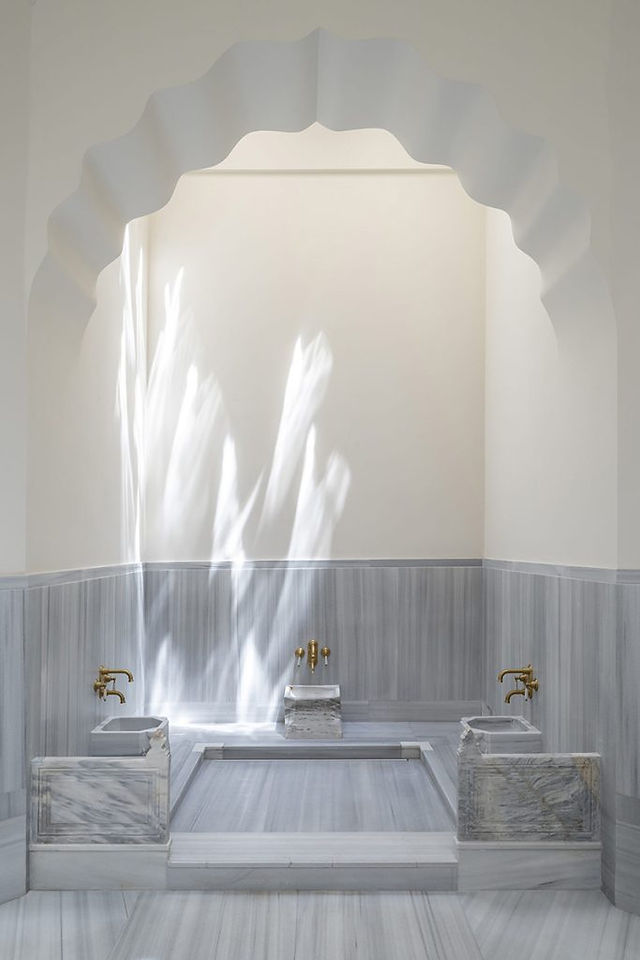
Thick stone and marble retain heat. Domed ceilings regulate steam. Small openings allow shafts of light to cut through the haze, creating an almost ethereal atmosphere. Every element is designed to support rest, circulation, and sensory immersion.
Even practicality was elevated to an art form. Early hammams shared heating systems with bakeries, maximising resources and minimising waste — a model of sustainability centuries before the term existed.
Zeyrek Çinili Hamam, interior shot. Photography: Orhan Cem Çetin. Zeyrek Çinili Hamam, interior shot. Photography: Orhan Cem Çetin.
Zeyrek Çinili Hamam, Photography: Orhan Cem Çetin.
A JOURNEY THROUGH HEAT AND STEAM
Stepping into a hammam is intentionally transformative. Soaring arches frame candle-lit rooms. Steam lifts from thick marble slabs. Light filters softly through domed ceilings, illuminating wisps of vapour. The atmosphere is designed not for decoration alone, but for transport - physically and mentally removing you from the outside world.
A traditional hammam bathing ritual follows a thermal circuit, moving the body gradually through spaces of increasing heat:
1. The Warm Room
The ritual begins gently. Here, the body acclimates to warmth, muscles soften, and pores begin to open. The mind slows. Breath deepens.
2. The Hot Room
In Turkish hammams, heat rises from hot, dry air. In Moroccan hammams, ambient warmth is created by hot water circulating through pipes beneath the stone. Sweat flows freely. An essential step in releasing toxins and mental tension alike.
3. Soap & Scrub
At the heart of the ritual is exfoliation. A tellak (attendant) applies a soap traditionally made from black or green olives, creating a rich, gel-like lather that glides across the skin. A vigorous scrub follows, sloughing away dead skin and with it, the weight of daily stress.
This moment is often the most memorable of the hamman bathing ritual: humbling, grounding, and deeply reviving.



Photography: İbrahim Özbunar
After this sensory immersion, you leave with skin that feels unmistakably smoother, warmer, and deeply alive.
Fashion designer and fragrance maker Behnaz Sarafpour, born in Tehran and raised within hammam culture, explains the difference:
“When you’re just washing your body, you’re not really rubbing hard on your limbs. What’s invigorating about the hammam is that, alongside exfoliation, you receive a massage that encourages the body to sweat freely — and the mind to let go.”
At the heart of the experience is the tellak, an attendant who guides the body through rising heat. The ritual moves from warm rooms that soften the skin to hotter chambers - dry and radiant in Turkish hammams, or humid and ambient in Moroccan ones, where warmth rises through stone floors.
In the hottest room, olive-based soap is worked into a rich lather before the signature scrub begins. Dead skin rolls away, circulation lifts, and the body tingles — invigorated but never painful. Thanks to the natural moisturising qualities of olive soap, the skin rebalances itself without the need for oils. “You exfoliate,” Sarafpour says, “and you leave it at that.”
Inspired by centuries of communal bathing, reimagined for today.
Move through steam, settle into the hot lounge, and awaken the skin with ice and salt scrubs. A modern hammam ritual at Capybara Bathhouse Sydney.

Comments